Indigenous History
Historica Canada's profile picture Created by
Historica Canada

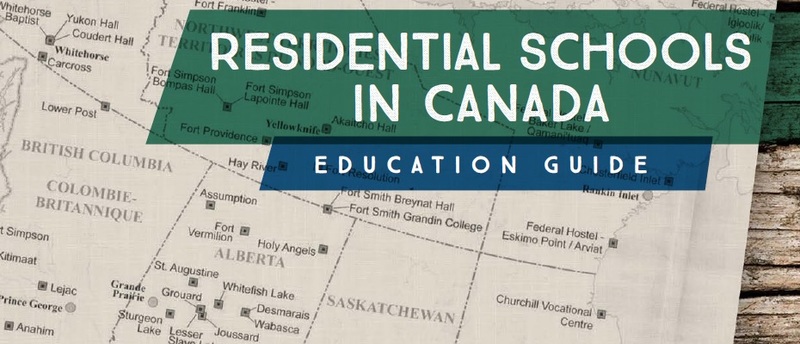
Residential Schools in Canada

Residential Schools in Canada
Residential schools were government-sponsored religious schools established to assimilate Indigenous children into Euro-Canadian society. Successive Canadian governments used legislation to strip Indigenous peoples of basic human and legal rights, dignity and integrity, and to gain control over the peoples, their lands and natural rights and resources. The Indian Act, first introduced in 1876, gave the Canadian government license to control almost every aspect of...
Historica Canada's profile picture Created by
Historica Canada

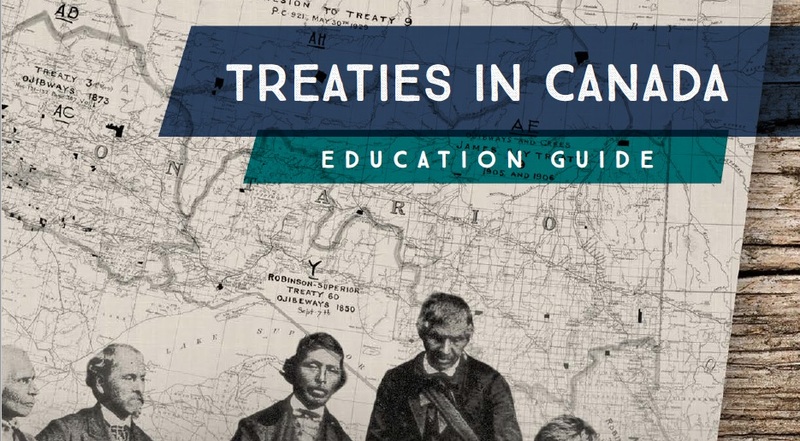
Treaties in Canada

Treaties in Canada

Beginning in the early 1600s, the British Crown (later the Government of Canada) entered into a series of treaties with Indigenous nations in Canada. The treaties were intended as formal agreements to encourage peaceful relations and to specify promises, obligations and benefits for both parties. Indigenous peoples wanted to protect their traditional lands, resources, and ways of life, while ensuring peace and friendship, and eventually receiving support as they shifted to...
Pre-Confederation

John Cabot


Overview


This lesson is based on viewing the Heritage Minute, "John Cabot." It was John Cabot's 1497 "discovery" of North America that led to the development of the North West Atlantic cod fishery, and England's claim to the new continent.

Aims


The "John Cabot" Minute is the starting point for an examination of several topics.

With role-playing activities and further research, students will study the Atlantic cod fishery, and consider the role of "explorers."

Students will study: resource...

Pre-Confederation

Jacques Cartier


Overview


This lesson is based on viewing the Heritage Minute, "Jacques Cartier," which presents the theory that Canada may have been named after a misunderstanding took place between Jacques Cartier and the Iroquois (Haudenosaunee) people.

Aims


Students will explore the relationships between the Indigenous people and early explorers by looking at the First Nations' contributions to European survival, and issues of miscommunication. Students will learn about France's motives for exploration of...

Hart & Papineau


Overview


This lesson is based on viewing the Heritage Minute, "Hart & Papineau." Under the tenure of Louis-Joseph Papineau, the Legislative Assembly of Lower Canada passed a bill in 1832 that ultimately guaranteed full rights to people practicing the Jewish faith. It was the first of the British colonies to do so.

Aims


After discussing and making sense of the events that take place in the "Hart and Papineau" Minute, students will watch additional related Heritage Minutes to develop their...

Inukshuk


Overview


This lesson is based on viewing the Inukshuk Heritage Minute, which depicts an RCMP officer watching a group of Inuit build an Inukshuk in the year 1931.

Aims


Students will learn about the "traditional" Inuit way of life and cultural expression.

These activities are intended to give students an appreciation and understanding of the Inuit culture and "traditional" way of life, as well as an understanding of how new technologies might alter Inuit culture.

Activities


1. Looking at the...

Showing all 6 Learning Tools